




Un vent familier hurle sur les îles Brisées, et les flèches de Dalaran scintillent sous un ciel déchiré par la Legion. Ce n'est pas la Legion dont vous vous souvenez — c'est Legion Remix, un retour à durée limitée à l'extension de 2016 avec un rythme plus rapide, des systèmes modernes et un chemin clair du niveau 10 à 80. Les Chronocoureurs parcourent les histoires classiques avec de nouvelles récompenses, des donjons plus courts et des raids réglés pour l'élan plutôt que pour des mois d'attente.
Au centre se trouvent les légendaires Armes prodigieuses. Soulever votre ancienne lame de guerre ou votre bâton, c'est comme rentrer dans une maison rénovée: les traits se débloquent en douceur, les niveaux d'objet grimpent grâce à des butins rationalisés, et la puissance augmente rapidement avec un plafond plus élevé. Dépoussiérez votre fantasme de classe — levez la Porte-Cendres, enflammez le Marteau-du-Destin, et maniez la puissance remixée scellée dans ces armes anciennes.
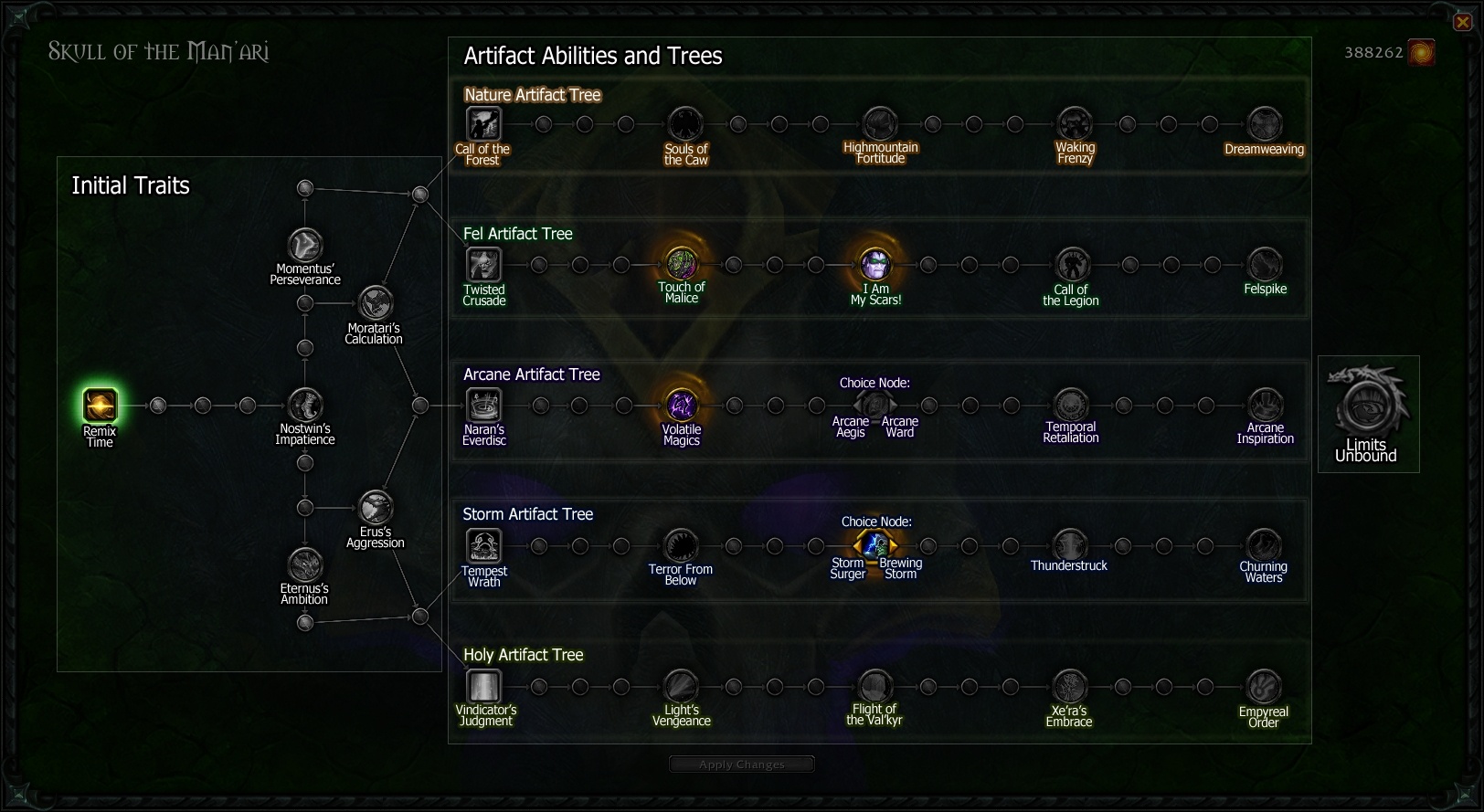
Dans Legion Remix, les armes prodigieuses reviennent avec un système de talents rationalisé mais hautement personnalisable. Toutes les Armes prodigieuses partagent un arbre de traits unique et étendu, mais à l'intérieur de cet arbre, vous pouvez choisir l'une des cinq voies distinctes pour vous spécialiser – Nature, GANGRENÉ, Arcane, Tempête, ou Sacré. Après avoir complété vos traits d'introduction de l'arme prodigieuse, on vous demande de sélectionner l'une de ces cinq capacités prodigieuses comme pouvoir actif unique de votre arme. Chaque voie correspond à une capacité thématique de cette source de pouvoir (par exemple, une capacité à thème gangrené ou une à thème sacré), et ce choix définit la direction du développement de votre arme prodigieuse. Fait crucial, vous n'êtes pas enfermé de manière permanente – vous pouvez respécialiser votre arme prodigieuse à tout moment si vous souhaitez essayer un autre type de pouvoir, alors n'hésitez pas à expérimenter.
Choisir une capacité prodigieuse débloque cette capacité pour utilisation (avec un temps de recharge modeste) et ouvre sa branche de talents correspondante dans l'arbre de l'arme prodigieuse. Chaque capacité prodigieuse est accompagnée d'une rangée de talents associés pour améliorer votre personnage. Ces branches sont linéaires, contenant plusieurs traits puissants (y compris des bonus passifs et parfois un proc supplémentaire ou un effet utilitaire) séparés par des groupes de petites améliorations. En pratique, vous dépenserez des points de prodige pour progresser le long de la ligne: généralement, trois nœuds mineurs «d'éclat» se trouvent entre chaque trait majeur de la branche, après quoi vous débloquez le prochain grand effet. Ce schéma se poursuit jusqu'à ce que vous atteigniez la fin de la branche, qui est un trait final ne coûtant qu'un point. Par exemple, un trait final passif appelé Impatience de Nostwin vous accorde un bonus de vitesse de déplacement cumulable chaque fois que vous vous déplacez hors combat (un clin d'œil ludique à l'affinité des Dragons de bronze pour jouer avec le temps). La capacité prodigieuse elle-même est le premier trait majeur de la branche, et c'est une compétence active unique à cette voie. Un exemple est Remix temporel – lorsqu'il est activé, Remix temporel déchire une faille dans votre ligne temporelle, faisant en sorte que tous vos temps de recharge se régénèrent 1 000 % plus vite pendant 3 secondes – une explosion exaltante de puissance temporelle. Ce n'est qu'un avant-goût du genre de capacités révolutionnaires que les armes prodigieuses offrent dans Remix. Chacune des cinq voies a sa propre capacité active comme celle-ci, suivie d'une série d'effets passifs puissants à découvrir.
Notamment, chaque spécialisation dans Legion Remix utilise exactement la même structure d'arbre de talents prodigieux. Contrairement à la version originale de Legion, la différence ici réside uniquement dans la voie de pouvoir que vous choisissez de suivre parmi les cinq. Cette conception unifiée signifie que, quelle que soit votre classe ou votre spécialisation, vous travaillez dans un système de progression prodigieux global – ce qui le rend beaucoup plus facile à équilibrer et à comprendre, tout en vous offrant des choix significatifs. Les cinq capacités prodigieuses sont en fait la «saveur» que vous choisissez pour votre arme, mais n'importe quelle classe peut choisir n'importe quelle voie. Vous êtes-vous déjà demandé ce qu'un Mage pourrait faire avec une arme prodigieuse infusée de gangrène, ou un Guerrier avec une lame bénie par le Sacré? Legion Remix vous permet de mélanger et d'associer les pouvoirs de manières qui n'étaient pas possibles auparavant. Et si vous changez d'avis sur votre voie, la respécialisation de votre arme prodigieuse est indolore et gratuite, vous n'êtes donc jamais coincé avec un choix que vous n'appréciez pas. La combinaison d'un arbre partagé et de branches sélectionnables établit un équilibre astucieux: elle recrée le frisson de construire une Arme prodigieuse pas à pas, mais avec une nouvelle couche de personnalisation au-delà des limites de la classe et de la spécialisation.
Avant d'accéder aux capacités prodigieuses tape-à-l'œil, vous devrez investir des points dans les traits initiaux de votre arme. Ces traits initiaux sont un ensemble de talents universels et génériques avec lesquels chaque arme prodigieuse doit commencer. Contrairement aux choix ultérieurs, ces traits de départ ne sont pas des décisions de type «l'un ou l'autre» – vous pourrez éventuellement tous les débloquer au fur et à mesure de votre progression, jetant ainsi des bases solides pour votre arme prodigieuse. Les traits initiaux consistent principalement en de petites améliorations passives des statistiques de base, often referred to as Arcanocrystal Shards.
Chaque éclat accorde une augmentation petite mais significative des attributs de base de votre personnage. Par exemple, l'Éclat d’arcanocristal puissant augmente votre statistique principale (Force, Agilité ou Intelligence, selon la classe) d'un pourcentage fixe. L'Éclat d’arcanocristal fortifié renforce votre endurance pour vous rendre plus résistant au combat. Il y a même un Éclat d’arcanocristal expéditif, qui améliore votre score de vitesse de déplacement – vous permettant de vous déplacer un peu plus vite dans vos aventures. Celles-ci rappellent les simples bonus de statistiques que nous avons vus dans les arbres prodigieux originaux de Legion, mais ici, ils sont standardisés sur toutes les armes.
En plus des éclats mineurs, la section initiale de l'arbre prodigieux contient une poignée de traits majeurs qui définiront les forces uniques de votre arme. Au total, chaque arme prodigieuse dans Legion Remix a six traits majeurs à débloquer dans son arbre de traits. L'un d'eux est la capacité prodigieuse active que vous choisissez, et les cinq autres sont de puissants effets passifs liés à la voie que vous avez choisie. Ces traits passifs peuvent aller de l'augmentation des dégâts à l'amélioration de l'utilité, en passant par des mécanismes entièrement nouveaux qui enrichissent votre style de jeu. Contrairement aux petits bonus de statistiques, les traits majeurs distinguent véritablement l'identité de votre arme prodigieuse – ce sont les grandes récompenses à différentes étapes de votre progression. Ce qui est important, c'est que chaque arme prodigieuse finira avec le même nombre de pouvoirs majeurs une fois son arbre entièrement débloqué: une compétence active et cinq passifs. Cette parité garantit qu'aucune classe ou spécialisation ne se sentira comme si son arme prodigieuse était «plus faible» – la différence réside dans les pouvoirs que vous avez, pas dans leur nombre. Et comme les traits mineurs peuvent tous être maximisés également, vous n'aurez pas à sauter de bonus de statistiques; votre arme prodigieuse pourra éventuellement atteindre 100 % de son potentiel de base avant que vous ne vous plongiez dans le trait final infini. Au moment où vous aurez investi des points dans tous les traits initiaux, vous aurez gagné une bonne quantité de statistiques brutes et débloqué votre première capacité majeure, préparant le terrain pour que la véritable personnalisation commence.

Votre voyage pour réclamer une Arme prodigieuse commence dès votre arrivée à Dalaran en tant que nouveau Chronocoureur. La suite de quêtes d'introduction de Legion Remix est un tourbillon à travers un territoire familier, réimaginé sous l'influence du Vol draconique infini. C'est à la fois un tutoriel et un crochet narratif, garantissant que vous comprenez les nouveaux systèmes (comme la monnaie Bronze, le recyclage de l'équipement, etc.) tout en mettant en place l'histoire de cette ligne temporelle remixée. Passons en revue les points forts de cette introduction:
En terminant «Un point fixe dans le temps», vous avez obtenu votre première Arme prodigieuse et remis la ligne temporelle sur la bonne voie. En montant de niveau à travers l'histoire de Legion (désormais plus rapide et plus gratifiante), vous continuerez à renforcer votre arme prodigieuse, à collecter des Souvenirs d'époque sur les boss, à augmenter votre Connaissance infinie et à débloquer de nouveaux traits.
Après avoir terminé l'introduction de Legion Remix une fois, une option pour passer devient disponible sur les personnages secondaires. La première fois que vous vous connecterez avec un nouveau Chronocoureur au niveau 10, vous ferez la séquence guidée de Dalaran qui se termine avec votre première arme prodigieuse. Sur les personnages suivants, vous pouvez choisir l'option intégrée pour passer pendant la configuration initiale de Dalaran. L'accepter vous fait sauter le chapitre d'introduction et vous accorde immédiatement l'Arme prodigieuse pour votre spécialisation actuelle, vous permettant de vous diriger directement vers votre Domaine de classe et dans les zones de Legion.
Il y a quelques avertissements importants lorsque vous utilisez cette option. Elle ne fournit qu'une seule arme prodigieuse, liée à la spécialisation active au moment où vous confirmez. Passez à la spécialisation que vous avez l'intention de jouer avant d'accepter, afin de recevoir la bonne arme. Si vous passez alors que vous êtes dans une spécialisation non désirée, vous n'êtes pas bloqué des autres; vous devrez simplement obtenir ces armes prodigieuses plus tard via leurs quêtes de classe habituelles. Jusqu'à ce que vous le fassiez, cette spécialisation n'aura pas de traits prodigieux, ce qui la rendra sensiblement plus faible au combat.
Deuxièmement, passer signifie que vous manquez certaines récompenses de quêtes initiales et la mise en place de la courte histoire à Dalaran. La perte pratique est faible par rapport à ce que vous gagnerez plus tard, mais si vous aimez rejouer les moments de l'histoire ou si vous voulez chaque petite récompense sur chaque personnage secondaire, refaites l'introduction. Cette fonctionnalité existe purement pour la commodité, pas pour la puissance. Utilisez-la si vous en avez fini avec les tutoriels; ignorez-la si vous appréciez la préparation et que la répétition ne vous dérange pas.
Une fois que vous confirmez l'option de passer, le jeu vous place dans votre Domaine de classe comme si vous aviez terminé la séquence. Votre arme prodigieuse pour la spécialisation active apparaît dans vos sacs ou est automatiquement équipée avec ses traits de départ, et vous pouvez commencer à investir de la Puissance infinie au fur et à mesure que vous en gagnez en jeu. Si vous prévoyez d'avoir plusieurs spécialisations sur ce personnage, vous devrez toujours débloquer les armes prodigieuses restantes via leurs courtes chaînes de quêtes de classe. Legion Remix conserve ces quêtes dans le flux; elles sont rapides, familières et s'adaptent à votre personnage afin que vous puissiez les faire quand cela vous convient.
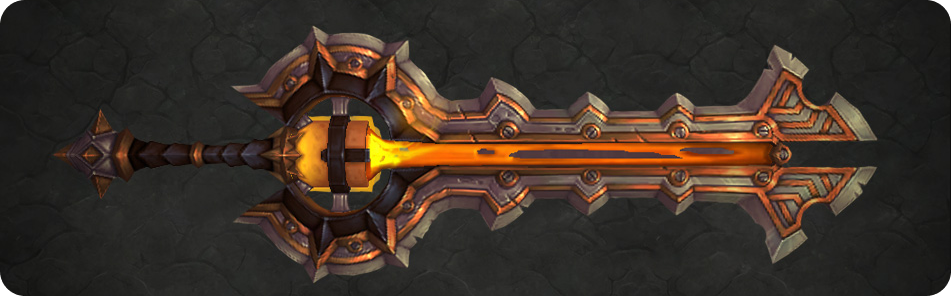
Les armes prodigieuses dans Legion Remix n'utilisent pas de reliques. Dans la version originale de Legion, vous insériez des reliques provenant de donjons et de raids pour augmenter le niveau d'objet d'une arme prodigieuse et parfois gagner des rangs supplémentaires dans des traits spécifiques; dans Remix, tout ce mini-jeu de sertissage est abandonné au profit d'une progression plus claire. Le niveau d'objet de votre arme prodigieuse augmente désormais automatiquement grâce à des objets appelés Sable d’artefactium et son plus grand paquet, Monticule de sable d’artefactium. Ces sables proviennent des mêmes types d'activités qui attribuent du Bronze — donjons et raids, quêtes, contenu mondial et autres activités générales — et sont automatiquement consommés lors du ramassage. Lorsqu'une pincée de Sable d’artefactium tombe, vous ne cliquez sur rien et ne sertissez rien: elle infuse immédiatement de la puissance dans la progression de votre arme prodigieuse pour ce personnage, augmentant le niveau d'objet effectif de vos armes prodigieuses. Cela s'applique également à toutes les armes prodigieuses de spécialisation que vous possédez sur ce personnage. Si vous êtes un Chevalier de la mort Givre avec deux lames ou un joueur qui alterne entre les armes prodigieuses de deux spécialisations, vous n'aurez pas besoin de reliques séparées ou de progressions parallèles d'ilvl; chaque butin contribue au même total courant, et toute arme prodigieuse que vous réclamerez plus tard sur ce personnage héritera de la progression de niveau d'objet accumulée. Avec le temps, vous verrez l'ilvl de votre arme prodigieuse grimper de son point de départ (adapté à votre contenu de montée de niveau) vers un plafond beaucoup plus élevé à mesure que vous affronterez des rencontres plus difficiles de Legion, sans encombrement d'inventaire et sans risque de stocker la «mauvaise» relique.
Une note importante: Legion Remix utilise un plafond unifié de niveau d'objet 740 de la phase d'Argus dès le début de l'événement. Dans la version originale de Legion, ce plafond était limité par le palier de contenu et le calendrier des patchs; dans Remix, le plafond est simplement disponible, et le Sable d’artefactium y contribue jusqu'à ce que vous l'atteigniez. Une fois le plafond atteint, le sable supplémentaire n'a plus d'effet sur le niveau d'objet de l'arme prodigieuse et, en pratique, les butins pertinents diminuent largement car il n'y a plus rien à améliorer. La cadence est simple: jouez à du contenu plus difficile ou plus gratifiant et vous aurez tendance à voir des gains de sable plus significatifs, avec le Monticule de sable d’artefactium agissant comme une récompense plus grande et plus rare qui fait progresser votre arme de plusieurs niveaux d'ilvl à la fois. Il n'est plus nécessaire de farmer des types de reliques spécifiques ou de rechercher des combinaisons de sertissage parfaites; vous jouez simplement, et votre arme prodigieuse s'améliore naturellement parallèlement à la progression de votre personnage. Un avantage secondaire utile du modèle d'amélioration à l'échelle du personnage est que si vous décidez d'ajouter une spécialisation secondaire plus tard, son arme prodigieuse commence au niveau d'objet que votre arme prodigieuse principale a déjà atteint sur ce même personnage — il n'y a pas de nouvelle progression par arme et pas de partage à l'échelle du compte à craindre. Globalement, remplacer les reliques par le Sable d’artefactium conserve la sensation satisfaisante de voir votre arme devenir plus forte tout en rendant l'entretien de l'arme prodigieuse considérablement plus convivial et cohérent entre les spécialisations que dans la version originale de Legion.
Pour compléter la progression de l'arme prodigieuse, Legion Remix ramène l'ancienne idée de la Connaissance prodigieuse sous une forme plus propre et adaptée à l'événement, appelée Connaissance infinie. La fonction est familière mais la mise en œuvre est différente: la Connaissance infinie est à l'échelle de la bande de guerre et basée sur les hauts faits. Vous gagnez des rangs de Connaissance infinie en accomplissant des hauts faits Remix désignés qui couvrent un large éventail du gameplay de Legion: avancer dans les chapitres de la campagne, progresser dans votre Domaine de classe, terminer des donjons et des rencontres de raid, et atteindre des jalons généraux de Remix qui marquent une participation régulière. Chaque haut fait qualifiant accorde un rang de Connaissance infinie, jusqu'à 36 rangs disponibles pendant l'événement. Chaque rang est un véritable multiplicateur de vos revenus de Puissance infinie «de toutes les sources», donc plus votre Connaissance est élevée, plus vos traits se remplissent rapidement, quel que soit le contenu que vous parcourez. L'intention reflète la courbe de Connaissance prodigieuse de Legion original (accélérer la puissance à mesure que vous jouez plus) mais sans tables de recherche limitées dans le temps ou minuteries de connexion. C'est simple: jouez, gagnez des hauts faits, et vos gains de Puissance infinie augmentent automatiquement pour toute votre bande de guerre.
Parce que la Connaissance infinie est partagée entre les personnages, c'est un avantage immédiat pour quiconque monte en niveau plusieurs Chronocoureurs. Gagnez, disons, 10 rangs sur votre personnage principal, et chaque nouveau personnage secondaire que vous créez dans Legion Remix bénéficie de ces gains de Puissance infinie plus élevés dès qu'il met le pied à Dalaran; il n'est pas nécessaire de reconstruire la rampe sur chaque personnage. Comme les rangs proviennent de hauts faits liés à des étapes de progression ordinaires que vous atteindrez de toute façon, une grande partie du parcours est naturellement gagnée simplement en faisant des quêtes, en parcourant des donjons, en s'essayant aux raids et en participant aux activités de Remix au fur et à mesure que vous les débloquez. À mi-événement, les joueurs actifs disposent généralement d'une Connaissance substantielle, et beaucoup atteindront ou approcheront le plafond de 36 simplement en continuant à jouer. Si vous accomplissez des hauts faits supplémentaires accordant de la Connaissance après avoir atteint le plafond, tout rang supplémentaire potentiel est automatiquement converti en Bronze, de sorte que l'effort ne semble jamais vain et votre temps de jeu rapporte toujours de la valeur.
Le résultat est exactement ce dont un mode à durée limitée a besoin: un développement de l'arme prodigieuse qui s'accélère à mesure que vous avancez, un mécanisme de rattrapage intégré qui rend les personnages secondaires tardifs viables, et une boucle de ressources propre qui récompense tout, des objectifs de session occasionnels aux marathons de fin de jeu, sans vous ensevelir sous les minuteries ou les feuilles de calcul.
À mesure que vous vous aventurez dans le contenu plus difficile de Legion Remix, vous commencerez à trouver un nouvel objet curieux: le Souvenir fragmenté des défis d'époque. Ces «Souvenirs d'époque» sont un élément clé de la progression de l'arme prodigieuse, surtout une fois que vous atteignez le niveau maximum et que vous vous plongez dans le contenu de groupe difficile. Essentiellement, un Souvenir fragmenté des défis d'époque est un morceau de Puissance infinie concentrée qui a été fragmenté à travers le temps. Seul, un seul fragment ne suffit pas à renforcer votre arme prodigieuse, mais si vous collectez 100 Souvenirs fragmentés des défis d'époque, vous pouvez les combiner en un Souvenir des défis d'époque complet, qui donne une poussée significative de Puissance infinie lorsqu'il est utilisé. Pensez-y comme à l'assemblage d'un puzzle: une fois que les 100 fragments sont assemblés, vous ouvrez effectivement un coffre au trésor de puissance prodigieuse qui propulse votre progression en avant d'une grande quantité.
Ce mécanisme est conçu pour récompenser les joueurs qui s'attaquent aux défis «d'époque» plus difficiles de Legion Remix (d'où le nom), tels que les donjons Mythique+ de haut niveau, les boss de raid, les rencontres de boss mondiaux et la progression de la Cache de trésors infinis qui accompagne de nombreuses activités de fin de jeu. Ces activités peuvent laisser tomber des Souvenirs fragmentés des défis d'époque en tant que butin bonus à côté de leurs récompenses normales. La collecte de Souvenirs fragmentés des défis d'époque devrait être une méthode principale pour accélérer le développement de votre arme prodigieuse dans Legion Remix — ils représentent de gros morceaux discrets de Puissance infinie qui dépassent ce que vous obtiendriez normalement en faisant des quêtes de routine ou en farmant sans effort, et ils s'intègrent parfaitement dans la philosophie plus large du mode «jouez à du contenu plus difficile, soyez mieux payé».
Alors, d'où viennent exactement ces fragments? En pratique, d'une grande variété de sources de fin de jeu à l'intérieur de Legion Remix, le contenu le plus difficile produisant généralement des butins plus fréquents ou plus généreux. Les élites ennemis dans le monde extérieur ont une chance d'attribuer un fragment lorsqu'ils sont vaincus, les boss mondiaux peuvent les laisser tomber dans leur lot de butin, et les boss de donjon de tout le spectre — y compris les clés — sont éligibles pour donner des fragments en plus de leur équipement habituel. Le raid suit le même principe mais s'adapte à la difficulté: les boss en mode Normal, Héroïque et Mythique peuvent laisser tomber des Souvenirs fragmentés en quantités qui reflètent le niveau de défi, et l'ajustement pendant les tests a augmenté le poids des sources de raid pour que les groupes organisés se sentent récompensés de manière significative. Le PvP et diverses activités de type défi au sein de Remix peuvent également accorder des fragments, soit directement, soit via des conteneurs de récompenses. En plus de cela, il y a la cadence de la Cache de trésors infinis que vous rencontrerez en accomplissant des activités Remix; ces caches peuvent contenir des fragments et, occasionnellement, un Souvenir complet d'un seul coup. La distribution est intentionnellement assez généreuse pour que si vous participez régulièrement au contenu de fin de jeu, vous accumulerez des fragments à un rythme régulier. Une fois que vous avez 100 fragments, ils se combinent automatiquement (ou vous pouvez convertir manuellement une pile dans vos sacs) en un objet Souvenir des défis d'époque.
L'intention de Blizzard avec les Souvenirs d'époque est de s'assurer que s'engager dans des rencontres plus difficiles soit directement gratifiant pour la courbe de puissance de votre personnage, sans faire revivre l'ancien train-train quotidien de la PA de la version originale de Legion. Au lieu d'être limité par des minuteries de connexion ou des plafonds quotidiens fixes, vous pouvez accélérer votre arme prodigieuse en choisissant du contenu qui vous met au défi. Le système s'articule également avec le thème du Vol draconique infini: en conquérant ces défis «d'époque», vous récupérez des morceaux de moments significatifs dans le temps et les reforgez en puissance pour votre arme. En pratique, si votre plan est de repousser les limites de votre arme prodigieuse ou si vous aimez les runs de haut niveau, vous voudrez farmer autant de Souvenirs que votre emploi du temps le permet. Une approche sensée est de cibler le contenu de la plus haute difficulté que vous êtes à l'aise de terminer; même une progression modeste dans les donjons et les raids organisés surpassera généralement le farm répété de monstres mondiaux triviaux en termes de revenus de fragments. L'économie de la puissance prodigieuse de Remix est fortement biaisée en faveur de ces récompenses massives, alors ne les ignorez pas — lorsque ces fragments de bronze brillants tombent, ramassez-les et continuez à empiler.
En parlant de Puissance infinie: c'est la principale monnaie que vous farmerez pour améliorer votre Arme prodigieuse. Elle joue un rôle similaire à la Puissance prodigieuse de la version originale de Legion, avec une livraison plus claire et plus rapide. Chaque fois que vous gagnez de la Puissance infinie, elle alimente les rangs de traits dans votre arbre prodigieux, débloquant progressivement des capacités et des bonus. La particularité est l'ubiquité: vous en gagnez de presque tout dans Legion Remix. Quêtes à travers Azsuna, farm de monstres à Suramar, accomplissement d'expéditions ou d'Assauts de la Legion, donjons et raids, pillage de Caches de trésors infinis — tout peut attribuer des objets de Puissance infinie. Remix ajoute également des orbes de Bronze aéroportés que vous pouvez traverser en volant pour des gains bonus, et des éliminations en charge de Vol à dos de Ciel-Écaille dans le monde ouvert qui éclatent en Puissance infinie supplémentaire. En bref, quel que soit le contenu que vous appréciez, il contribue à la croissance de l'arme prodigieuse, de sorte que le temps ne semble jamais perdu.
La Puissance infinie arrive généralement sous forme de jetons ou de consommables qui s'appliquent automatiquement lors du butin. Un petit butin pourrait être quelque chose comme un «Éclat de sablier débordant» valant une modeste quantité qui est instantanément ajoutée à votre total; les sources plus importantes livrent des gains plus importants. Comme indiqué précédemment, la combinaison de 100 Souvenirs fragmentés des défis d'époque en un Souvenir des défis d'époque accorde un paiement unique majeur. Les récompenses augmentent à mesure que vous progressez dans les phases ultérieures et les difficultés plus élevées, et elles sont en outre multipliées par la Connaissance infinie, de sorte que les gains précoces sont faibles tandis que les remises de fin de jeu peuvent être spectaculaires. Les chiffres deviennent grands à dessein; le système s'y attend.
Investir de la Puissance infinie fait plus que débloquer des traits. En la dépensant, votre arme prodigieuse augmente passivement vos statistiques grâce au buff en jeu Puissance infinie, qui montre la statistique principale et l'endurance supplémentaires accordées à votre niveau actuel (et, une fois que vous êtes dans les rangs infinis, la Polyvalence ajoutée par Limites infinies). Votre arme vous renforce à la fois qualitativement (nouveaux pouvoirs) et quantitativement (statistiques directes), faisant écho à la sensation de «cumuler des statistiques en améliorant» de la cape de Pandaria Remix. Si vous voulez le bonus exact à un moment donné, passez la souris sur l'icône du buff pour une ventilation en direct.
Pour acquérir efficacement de la Puissance infinie, mélangez les activités. Une boucle quotidienne pourrait être une expédition pour une cache, un balayage de trajet aérien pour attraper des orbes de Bronze, un ou deux rares, un donjon avec des amis, puis un objectif de Recherche infinie — tous alimentant le même pot. Il n'y a pas de plafond hebdomadaire; votre seule limite est le temps de jeu. Grâce à la Connaissance infinie, un jeu modéré suffit pour débloquer confortablement vos traits principaux, tandis que les joueurs hardcore poussent plus loin dans le nœud infini. De manière cruciale, la Puissance infinie est partagée entre toutes les armes prodigieuses du même personnage: vous n'améliorez pas l'arme de chaque spécialisation séparément. Débloquez une arme prodigieuse de spécialisation secondaire et elle hérite du même total investi, vous permettant de changer de rôle sans prendre de retard. Obtenez simplement l'arme via sa suite de quêtes et dépensez à partir de votre pot existant.
Enfin, le Bronze n'est pas utilisé pour la progression de l'arme prodigieuse dans Legion Remix. Contrairement à la cape de Pandaria Remix, vous ne dépenserez pas de Bronze pour gagner en puissance. Le Bronze reste une monnaie pour les cosmétiques, les montures et les jouets; la Puissance infinie est entièrement distincte et dédiée à la croissance de l'arme prodigieuse. Cette séparation nette vous permet de vous renforcer librement tout en économisant du Bronze pour les choses amusantes. Gardez l'œil ouvert pour ces jetons brillants et le carillon distinct lorsqu'un tombe — c'est votre arme prodigieuse qui devient plus forte.
Les Armes prodigieuses de Legion Remix sont profondément inspirées des armes prodigieuses originales de Legion, mais il y a quelques différences et améliorations clés dans la version Remix. Il est utile de résumer ces changements pour les vétérans qui se souviennent de l'ancien système:
Un arbre de traits unifié pour toutes les Armes prodigieuses
Dans le Legion de l'époque, chaque arme prodigieuse avait un arbre de traits complètement unique adapté à sa classe et à sa spécialisation. Les talents de la Porte-Cendres étaient différents de ceux de Felo'melorn, qui étaient différents de ceux du Marteau-du-Destin, etc. Dans Legion Remix, ce n'est plus le cas – chaque arme prodigieuse utilise le même arbre de talents partagé, avec les cinq voies de pouvoir (Nature, GANGRENÉ, Arcane, Tempête, Sacré). Cela signifie que tous les joueurs progressent le long d'une structure équivalente, juste avec des choix thématiques différents. L'arbre prodigieux de Remix est plus proche d'un mini-système de talents commun à tout le monde. Ce changement simplifie grandement l'équilibrage et permet aux joueurs de choisir une puissance prodigieuse qui n'est pas nécessairement liée au fantasme de leur classe (par exemple, un Paladin pourrait choisir une capacité prodigieuse à thème gangrené s'il le souhaite). Cela peut sembler étrange au début, mais en pratique, c'est assez libérateur – vous n'êtes pas enfermé dans un chemin prédéfini par Blizzard pour votre spécialisation, mais vous pouvez choisir le chemin qui vous intéresse le plus. Et comme la respécialisation est gratuite, vous pouvez même changer de chemin en fonction de la situation ou si un chemin est amélioré/nerfé, etc. Globalement, cette unification rapproche le système des Armes prodigieuses d'un bac à sable pour l'expérimentation des joueurs, par opposition à une progression prédéterminée.
La Puissance prodigieuse est partagée entre les spécialisations
Dans Legion 2016, si vous jouiez plusieurs spécialisations, vous deviez gagner et dépenser de la Puissance prodigieuse séparément sur chaque arme prodigieuse. C'était un point de douleur notoire – de nombreux joueurs se sentaient obligés de s'en tenir à une seule spécialisation car leurs autres armes prodigieuses seraient trop faibles sans le double de farm de PA. Legion Remix corrige cela complètement. Toute la Puissance infinie que vous gagnez est appliquée à toutes vos armes prodigieuses sur ce personnage. Vous avez un seul pot de progression prodigieuse, et il renforce l'arme que vous utilisez. Si vous investissez 100 points de traits de puissance dans l'arme prodigieuse de votre spécialisation principale, l'arme prodigieuse de votre spécialisation secondaire aura également 100 points prêts à être alloués (une fois débloquée). Il n'y a pas de concept de «recommencer à zéro» sur une deuxième arme. De cette façon, vous pouvez librement changer de spécialisation pour profiter de différents styles de jeu ou remplir différents rôles de groupe sans avoir l'impression de sacrifier des mois de progression prodigieuse. C'est une conception beaucoup plus conviviale pour les spécialisations secondaires, et elle garantit qu'aucune arme n'est laissée pour compte. En pratique, cela signifie que si vous êtes une classe hybride (disons un Druide qui peut tanker, soigner et DPS), un seul personnage peut maximiser les quatre armes prodigieuses d'ici la fin de l'événement avec à peu près le même effort qu'il faudrait pour en maximiser une – car chaque donjon, raid ou expédition que vous faites contribue à toutes simultanément.
Pas de reliques; améliorations de niveau d'objet rationalisées
Le système original des Armes prodigieuses avait des emplacements de reliques qui augmentaient le niveau d'objet et ajoutaient des rangs supplémentaires à certains traits. Dans Legion Remix, les reliques ont entièrement disparu. À la place, le niveau d'objet de l'arme prodigieuse est amélioré par ces objets de Sable d’artefactium qui tombent du contenu et augmentent automatiquement l'ilvl de votre arme prodigieuse. C'est un système global (pas d'emplacements à gérer) – si vous obtenez du Sable d’artefactium, toutes vos armes prodigieuses deviennent plus fortes. Il n'y a plus non plus de rangs de traits bonus aléatoires provenant des reliques; cet aspect est géré par les nouveaux bijoux prodigieux qui peuvent accorder des rangs bonus ou briser les limites des traits comme décrit précédemment. L'absence de reliques rend l'entretien de l'arme prodigieuse beaucoup moins dépendant de l'équipement. Vous ne farmerez pas des butins de boss spécifiques pour remplir vos emplacements de l'arme prodigieuse. L'arme prodigieuse de tout le monde atteindra le même niveau d'objet maximum à la fin (plafond ilvl 740, comme indiqué ci-dessus), uniquement par la participation au contenu plutôt que par la chance ou le butin. Cela met l'accent sur la Puissance infinie et les traits comme mesure de la croissance de votre arme prodigieuse, plutôt que sur les différences de niveau d'objet. Cela signifie également que lorsque vous voyez l'arme prodigieuse d'un autre joueur, vous savez que toute différence de puissance provient de ses choix de traits et de la quantité de Puissance infinie qu'il a accumulée – pas parce qu'il a eu la chance d'obtenir une relique d'ilvl supérieur au vôtre. C'est un terrain de jeu plus équitable et cela supprime un élément de RNG de la progression de l'arme prodigieuse.
Déblocages plus rapides et pas de limitation dans le temps
Legion à l'époque avait la Connaissance prodigieuse limitée dans le temps sur plusieurs semaines, et les traits étaient limités par les patchs de contenu (par exemple, le patch 7.2 a ajouté plus de traits et la Concordance). Legion Remix accélère tout. Avec suffisamment d'efforts (et en gagnant de la Connaissance infinie via les hauts faits), vous pouvez essentiellement parcourir en accéléré ce qui prenait des mois dans Legion, le tout dans le cadre de l'événement Remix. L'arbre de traits inclut toutes les puissances pertinentes du lancement à Argus combinées, disponibles dès le début. Vous ne recevrez donc pas soudainement un nouveau lot de traits prodigieux à mi-parcours de l'événement; ils sont tous intégrés dans l'arbre dès le départ (y compris le trait infini qui imite la Concordance). La progression est également finie en termes de traits distincts – une fois que vous avez vos cinq traits de voie et ainsi de suite, vous en avez fini avec cet aspect – et infinie en termes du trait final. En raison de cette conception, vous ne verrez pas de retards artificiels comme devoir attendre une certaine semaine pour débloquer un trait. Les joueurs qui s'engagent activement débloqueront l'ensemble de leur arme prodigieuse assez rapidement (en une semaine ou deux pour la plupart, peut-être plus vite pour les joueurs hardcore), puis passeront le reste de l'événement à pousser le trait infini ou simplement à profiter du contenu avec leur arme prodigieuse à pleine puissance. Cela répond à beaucoup des plaintes du début de Legion où les gens se sentaient «faibles» jusqu'à ce que leur arme prodigieuse soit remplie. Dans Remix, vous trouverez votre rythme beaucoup plus rapidement.
En résumé, Legion Remix a modernisé le système des Armes prodigieuses pour le rendre plus flexible, moins répétitif et plus axé sur le choix du joueur que son homologue de 2016. Vous ne regretterez pas l'époque des farms de PA spécifiques à une spécialisation ou de la chance des reliques, et vous apprécierez les nouvelles fonctionnalités comme la progression partagée et la mise à l'échelle des traits infinis. Pourtant, l'essence de la progression de l'arme prodigieuse – ce sentiment de renforcer progressivement une arme ancienne et d'en acquérir de nouvelles capacités – est bien vivante. C'est le meilleur des deux mondes: un système de progression nostalgique dont les défauts ont été gommés. Si vous avez aimé les armes prodigieuses dans Legion, vous trouverez beaucoup de choses à apprécier ici; et si vous détestiez les armes prodigieuses à l'époque, donnez une chance à celles-ci remixées, car beaucoup de vos points de douleur ont été traités par ces changements.