




Having closed the book on the Classic Era’s long campaign, Azeroth’s veterans are turning back toward the Dark Portal — and this time, it’s the Burning Crusade Anniversary Classic calling. Outland is still the same shattered sky and scorched stone, but the journey hits differently with TBC systems, new class toolkits, and fresh prep windows that reward players who plan instead of panic.
Below, we break down everything coming with the shift into the Anniversary version of The Burning Crusade — from the pre-patch kickoff and what unlocks immediately, to the big leveling and gearing priorities that matter most before you ever set foot on Hellfire soil.
Be sure of one thing: you won’t miss a thing!
The Anniversary pre-patch is the real starting line. Outland is still locked, but the game already shifts into TBC mode: your class kit changes, new characters enter the world, and you get a short window to level, gear up, and get your setup ready so you’re not wasting the first days of launch on basics.
⚜ Pre-Patch Launch: The Burning Crusade Classic Anniversary pre-expansion patch arrives on January 13, 2026, after regional maintenance. This patch introduces TBC systems while keeping Outland closed until the full launch. No official launch date is given yet, but a few weeks of pre-patch are expected before Outland itself opens.
⚜ New Races Unleashed: Blood Elves (Horde) and Draenei (Alliance) become playable immediately in the pre-patch, allowing players to level these new races from scratch. The Horde can now field Blood Elf Paladins, and the Alliance gain Draenei Shamans – a defining feature of TBC. Both races bring unique racial abilities and starting zones to explore.
⚜ Talent and Profession Updates: All classes receive their Burning Crusade talent trees and spell adjustments in the pre-patch, fundamentally changing gameplay from the Classic Era version. Additionally, Jewelcrafting – the new profession – is available to learn and level, letting players start cutting gems and crafting rings/amulets ahead of the Dark Portal’s opening. Draenei characters even have a racial Gem Cutting passive to boost their Jewelcrafting skill.
⚜ Prepare for Level 70: Although you can’t venture into Outland yet, you can begin leveling Blood Elves or Draenei and preparing your characters for the increased level cap of 70. This time, the pre-patch period is expected to be longer than TBC Classic’s rushed two-week window in 2021, giving everyone a fair chance to level new characters and settle in before the Portal opens (no more frantic leveling in just 14 days!).
Before you step into the Anniversary version of TBC, you’ll hit a real fork in the road: what happens to your characters on these realms going forward. This is the decision point that matters, because it’s time-limited, one-way, and it shapes where each character lives from here on out.
⚜ Choose Your Destiny: With the pre-patch, every character on the Anniversary realms must make a one-time choice — progress into Burning Crusade Classic Anniversary or return to Classic Era. Blizzard is offering free character transfers from Anniversary realms to Classic Era realms from November 25, 2025 until January 12, 2026. This is the window to decide each character’s fate.
⚜ No Going Back (or Double-Dipping): After January 12, the free transfer option closes. Any characters still on Anniversary realms will be irrevocably committed to Burning Crusade progression. Notably, unlike 2021’s service, no paid character cloning is available — you cannot keep one copy in Era and one in TBC. It’s a true fork in the road: either move your character to an Era realm or carry on into TBC.
⚜ Plan Accordingly: Because there’s no clone service, think carefully for each character. If you have sentimentally valuable characters or guilds on Anniversary realms that you want to remain in Vanilla Classic, use the transfer period. Otherwise, prepare them to step into Outland. Remember that transfers are one-way; once a character goes to Era or stays for TBC, the decision is final.
If you’re coming from Hardcore, this is the section that decides whether your character’s story continues into TBC at all. The rules here are simple but unforgiving: there’s no official safety net for Hardcore in Outland, and your options depend entirely on what you do during the transfer window.
No Official Hardcore TBC Servers: Blizzard has confirmed that there will be no dedicated Hardcore realms for Burning Crusade Anniversary. Hardcore characters will not automatically progress into Outland under Hardcore rules. Instead, during the transfer window, players on Anniversary Hardcore realms have a one-time chance: transfer your Hardcore character to a Normal Anniversary realm (losing its Hardcore status) so that it can continue into Burning Crusade. This is essentially a way to “retire” your Hardcore hero into the standard ruleset before TBC launch.
If you do not move your Hardcore character by January 12, it will remain on the Hardcore era realm. After that date, its only allowed transfer will be to Classic Era non-Hardcore realms. In fact, Blizzard clarified that any Hardcore characters left on those realms will be able to transfer to Era if they die, effectively giving them a second life on normal Classic servers. But they will not be able to go to Burning Crusade at all after the cutoff. But the Community Hardcore Still Lives. While there’s no official Hardcore mode in Outland, the community may carry on the Hardcore challenge on their own. Players who crave the added thrill can still roll on Normal TBC realms but follow the “one life” rule and add-on verification, much like early 2021 before official Hardcore existed. Ultimately, Hardcore is a personal challenge – Blizzard’s stance is that the spirit of Hardcore will persist through community-driven efforts, even if not formally supported. If you seek to conquer Outland with zero deaths, you’ll be doing so unofficially, for bragging rights and personal satisfaction.

TBC Anniversary Classic is not a pure rewind — it’s Outland rebuilt for 2026 habits, where the nostalgia stays intact but the friction is rebalanced. Some systems are streamlined so more groups can actually see the content, while a few pressure points are deliberately left sharp to keep the game honest. You’ll feel it the moment the pre-patch hits: priorities shift.
In this chapter we’ll walk through the unique rule changes that define the Anniversary realms: how progression, alts, raiding, Heroics, PvP, economy, and guild logistics differ from the 2021 release, and what those differences mean for your prep, your gold, and your week-to-week routine.
Bloodlust and Heroism stop being a “which group gets it” argument and become a raid-level weapon you plan around every boss. In Anniversary, the power is still huge, but the rules are cleaner: one cast hits everyone, and a built-in lockout keeps it from being spammed inside the same long pull.
Yes, finally in TBC Anniversary, the infamous Shaman buff is no longer party-limited — it’s raid-wide. When a Shaman casts Bloodlust (Horde) or Heroism (Alliance), everyone in the raid gets the 30% haste buff simultaneously.
End of Shaman Stacking Gimmicks: Back in original TBC, optimizing Bloodlust meant rotating Shamans between groups to give multiple lusts to the top DPS players. Those tricks are history now. With a single raid-wide Lust and a lockout per fight, you no longer need an army of Shamans. Every raid will certainly bring at least one Shaman for Bloodlust, but beyond that, raid leaders have more flexibility. Expect one Bloodlust per boss, making it a true tactical nuke for each major battle. This change is massive for raid DPS. Heroism is one of the most powerful buffs in WoW’s history, and having it available on every boss attempt without having 5 shamans in your raid composition will accelerate kill times dramatically and add much needed class balance to the Burning Crusade raid scene.
If you’re the kind of player who wants to raid without living on the edge of a spreadsheet, Anniversary is built for you. The big shift is simple: raids arrive already in their later, post-nerf forms, so progression is smoother, gear checks are less brutal, and more groups can realistically see the full arc of Outland without getting hard-stuck for weeks.
⚜ Post-Nerf Raids from Day One: All raids in Burning Crusade Classic Anniversary will launch in their final, nerfed state — effectively the version of each raid after all original TBC patches and hotfixes. Over TBC’s lifespan, Blizzard issued many raid nerfs to lower difficulty once new tiers were released. Anniversary realms are skipping the initial “pre-nerf” versions entirely. Tier 4 raids (Karazhan, Gruul’s Lair, Magtheridon’s Lair) will reflect the numerous nerfs they got in 2007-2008, such as Nightbane, Gruul, and Magtheridon having significantly reduced health and damage. Tier 5 (SSC and Tempest Keep) was hit even harder by retroactive nerfs — mechanics were removed or eased (e.g. Lady Vashj’s punishing mind-control ability was removed in later patches) and bosses and trash had their HP slashed by up to 30-40%. Even the infamously complex Kael’thas encounter was shortened and simplified post-nerf. Tier 6 (Black Temple, Mount Hyjal) was comparatively easier to begin with and received only minor nerfs, so those raids won’t feel drastically different, just a bit more forgiving. Sunwell Plateau, the final raid, remains mostly unnerfed except for the critical adjustment that already happened in 2008: M’uru’s phase was toned down (his health and adds’ health were reduced) to make that brick-wall fight more manageable.
⚜ Crushing Content with Ease: The result of all raids being nerfed from the start is that overall raid progression will be much smoother and easier than in 2021’s Classic launch. Guilds that struggled in pre-nerf Tier 5 back then will steamroll those bosses this time around. When you combine these raid nerfs with other Anniversary changes — like readily available consumables and having Bloodlust raid-wide — expect a far more relaxed PVE experience. Many guilds will achieve full clears of tiers that previously required serious sweat and coordination. This is great for casual and smaller guilds who want to see all the content without roadblocks. On the flip side, some players may miss the challenge; Blizzard has noted community feedback about difficulty and is experimenting with other ways to add challenge (more on that below). But as it stands, if you know the mechanics and have decent gear, you’ll find Anniversary raids relatively forgiving. Sharpen your blades, but know that the foes you face have already felt the sting of a thousand nerfs.
Raids may be coming in their softened, late-era form, but Heroics are the place where Anniversary still bites back. If you want five-man content that actually demands crowd control, careful pulls, and tanks who can take a hit, this is where the game pushes you to play clean again:
In response to player feedback desiring some tougher content, Blizzard decided to make Heroics dungeons use their original “pre-nerf” tuning on Anniversary realms. During original TBC, Heroics were quite challenging at launch, but later patches nerfed many of them (reducing mob damage, easing brutal mechanics, etc). On the PTR, Blizzard reverted those nerfs, so Heroics will be harder than they were in late TBC Classic – more in line with how they were early on. This change is intended to give min-maxing players optional challenging content (and a way to distinguish themselves by clearing tough Heroics for gear) even while raids themselves are easier. Be prepared for a fight when you step into Heroic Shattered Halls or Shadow Labyrinth early on — crowd control, careful pulls, and geared tanks will be as important as ever. If you remember the “pain” of Heroic Arcatraz or Shattered Halls pre-nerf, brace yourself, because that pain is coming back!
If you love alts, Anniversary is finally on your side. The long “do it again, and again, and again” attunement grind gets cut down to a single meaningful run, and everything after that is about actually playing the game — running Heroics, stepping into Raids, and filling the roster without dragging every character through the same hoops.
⚜ Heroic Dungeon Attunements Made Alt-Friendly: The dreaded Revered reputation grind for Heroic dungeon keys is relaxed for your alts. Your first character still needs to quest and grind each Outland dungeon reputation to Revered to buy the Heroic key as normal. However, once you do, you can purchase a special Bind-on-Account key (it comes in a bag) that you can send to your alts. Any alt that is at least Friendly with that faction can use the key to unlock all its Heroic dungeons. Because the key is Bind-on-Battle.net-Account, this even works cross-faction – for example, your Alliance main can send a key to your Horde alt on the same BNet account.
⚜ One-Time Raid Attunements: Say goodbye to doing Karazhan attunement on every alt. In Anniversary Edition, once you attune your main to a raid, that raid is unlocked for all characters on your Battle.net account. Each raid’s attunement quest or requirement will need to be completed once by at least one character. After that, every alt you have can zone into the raid without having to earn keys or kill previous bosses for attunement. This “one and done” approach means you won’t burn out repeating long attunement chains like Karazhan’s key quest or the Trials of the Naaru for Tempest Keep on multiple characters.
These changes remove the old barriers to entry for endgame content. The first playthrough of attunements still provides that epic questing experience (so the lore and effort aren’t lost entirely), but subsequent playthroughs can jump straight into the action. Want to bring a freshly leveled alt into Karazhan or Heroic dungeons to help your guild? Go right ahead – as long as your main has paved the way, your alts can dive in with minimal fuss. This dramatically increases the alt-friendliness of Burning Crusade, letting players enjoy more classes and roles without endless attune grinds.
Arena in TBC Anniversary is built to get you playing faster and gearing with less friction. The system leans into modern personal rating, smooths out the worst “stuck at zero” moments, and keeps the ladder moving — so you spend more time fighting real matches and less time wrestling old barriers.
⚜ Personal Rating Starts at 1500: In TBC Anniversary, arena teams are gone in favor of the modern personal rating system, but Blizzard wants to revive the old feeling of starting fresh at a mid-range rating. Now, every character’s rating begins at 1500 (instead of the dreaded 0). Moreover, if your rating falls below 1500, you have the option once per week to reset it back to 1500 for a gold cost. The gold fee varies by bracket size and you can do one reset per bracket weekly. Essentially, this replicates the old strategy of creating new arena teams at 1500 when your team tanked – but without the actual team-creation step. It means you won’t be stuck in the basement rating all season; you can always springboard yourself back to a "competitive" starting point (for a price in gold).
⚜ Lower Barriers for PvP Gear: Say goodbye to brutal rating requirements on most PvP gear. In Anniversary, the only items with rating requirements are the shoulder slot (2000 rating) and the elite weapons (1700 rating). Everything else – armor pieces, off-hands, etc. – has no rating requirement besides earning the arena points to buy them. This is a huge accessibility change, even casual arena players can gradually collect a full set of PvP gear (minus shoulders/weapons) just by playing games and accumulating points, without ever worrying about hitting a certain rating threshold. Also, the overall Arena point cost of gear has been slightly reduced. The design intent is clear: let people gear up and participate in PvP more easily, to keep the arenas active and fun for a broader population.
⚜ Reputation Gear from Day One: In original TBC, each faction had a PvP honor set (e.g., the High Warlord/Grand Marshal gear) and separate reputation PvP gear with set bonuses, which came later. In Anniversary, the faction reputation PvP sets will be available from the start of Season 1. Furthermore, Blizzard is combining their set bonuses with the Honor gear’s bonuses. Practically, this means you can mix and match Honor gear and rep gear freely to get your 2-piece and 4-piece bonuses; you won’t be forced to wear only one type to benefit. This gives PvPers more flexibility in gearing up during early arena season – you can fill gaps with whatever pieces you can get first, and you’ll still activate powerful set bonuses.
⚜ Dampening to End Marathon Matches: To address those rare but frustrating endless arena matches (imagine two healers dueling for 45 minutes...), Blizzard is introducing the Dampening mechanic to TBC arenas. In 2v2, if a match goes beyond 20 minutes, a healing reduction debuff (“dampening”) will begin, increasing by 6% per minute until healing is completely negated. In 3v3 and 5v5, dampening won’t start on a timer, but if both teams have lost members and the fight drags on (essentially when it’s a low-DPS stalemate), then after 5 minutes of that state, dampening will kick in. This ensures that extremely long matches will eventually resolve as healing becomes less effective. Most teams won’t notice this in regular play, as matches usually end before these conditions, but it’s an important change to prevent edge-case stalemates. Arena in Anniversary is intended to be fast-paced and accessible, not a turtle-fest. So dive in, try new comps with the easy reset feature, and enjoy a more player-friendly arena system where the focus is on fun competition rather than hardcore gating.
Guild banks arrive right at launch, and that’s a bigger win than it looks on paper. Instead of juggling bank alts and scattered personal storage, your guild gets one shared place to park mats, consumables, BoEs, and Gold — so gearing, raiding, and helping each other feels organized from day one.
Unlike the original Burning Crusade Classic (2021) where guild banks were added later in the expansion, the Anniversary Edition introduces Guild Banks at launch, giving every guild an immediate shared repository for items, materials, and gold. No more clunky bank alts or juggling multiple personal bank tabs — your guild gets a real vault right away, right where you’d expect it: at regular bank locations in major cities (look for the new vault object next to bankers). Guild Banks come with eight purchasable tabs, 98 item slots per tab, with the first tab costing 100 Gold (and each additional tab costing more). Leaders can also set permissions per tab, controlling who can view or withdraw items and how much gold repair allowance members have, which makes it easy to centralize flasks, food, crafting mats, and BoE gear for clean distribution — and it’s just as useful for social guilds sharing leveling gear and helping each other out.
Strategically, guilds should plan their tabs with intent — for example, one for raid consumables, one for valuable BoEs or crafting materials, one for donations, and so on. With Guild Banks live from the start, smart guilds on Anniversary realms can hit the ground running by gathering resources during leveling and slotting them into the bank to gear up everyone for Heroics and raids.
Terokkar’s herb scene is getting a quality-of-life upgrade that matters more than it sounds: better Terocone availability means less time fighting other players for nodes, and more time turning that farm into real raid power. If you remember how painfully scarce Terocone felt in 2021, this change is Blizzard stepping in before the economy spirals again.
The herb Terocone, native to Terokkar Forest, has seen its spawn rates boosted significantly, with many additional herb nodes added across the zone. In 2021’s TBC Classic, Terocone was notoriously scarce and in absurdly high demand (it’s a key ingredient in Haste Potions, among other consumables). By increasing supply, Blizzard aims to stabilize the economy and ensure that average players can afford their flasks and potions.
On the Anniversary mega-realms, population is high, so this change is crucial. Herbalists will find more Terocone spawns during their farming runs, and the faster respawns mean competition over nodes is less cutthroat. If you plan to raid or push high-level content, take advantage of this and stockpile your Haste Potions and elixirs. Consumable prices should drop somewhat from their previous heights, making it less burdensome to raid at peak performance.
This proactive change shows Blizzard learned from the past — when hundreds of players competed for a handful of herbs, it wasn’t a fun situation. With Terocone plentiful, guilds can be well-prepared for progression, and support professions (like Alchemy) won’t feel impossibly gated by scarce materials. It’s open season in Terokkar, so happy herbing!
In classic modern Blizzard fashion, even the classic re-releases don't come without some extra cosmetic options for $$$. The Anniversary Packs are basically for players who want a little extra flair on day one: mounts, pets, toys, and a couple convenience perks depending on the bundle. Nothing here is required to play, but if you’re the kind of person who likes stepping through the Dark Portal with a clean new look (or a faster start on an alt), this is where that stuff lives.
The 2 cosmetic bundles on offer are the Outland Heroic Pack and Outland Epic Pack. These packs are entirely optional but come with some flashy perks. Both editions include a slew of Burning Crusade-themed cosmetics across WoW versions (Classic and Retail), including mounts, pets, and toys. Notably, for the first time a flying mount is being added to Classic: the Starshard Netherdrake is included as a mount usable in Burning Crusade Classic. There’s also a new Phase-Hunter ground mount (a blue-skinned variant for Classic), a cute Starshard Whelpling pet, an Exodar transmorphic toy, and a Naaru-themed Hearthstone effect – plenty of pizzazz to make your character stand out in Azeroth or Outland.
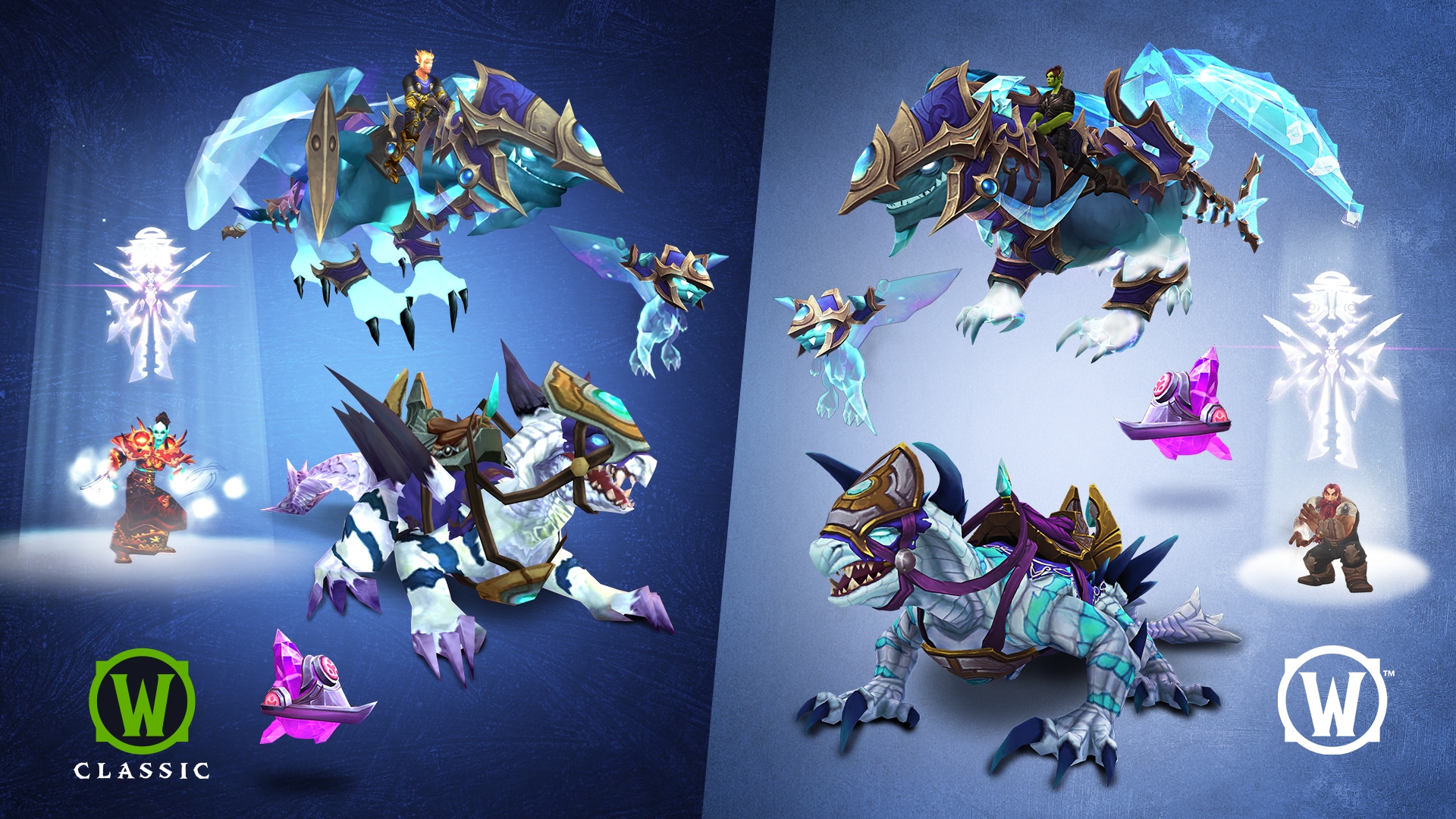
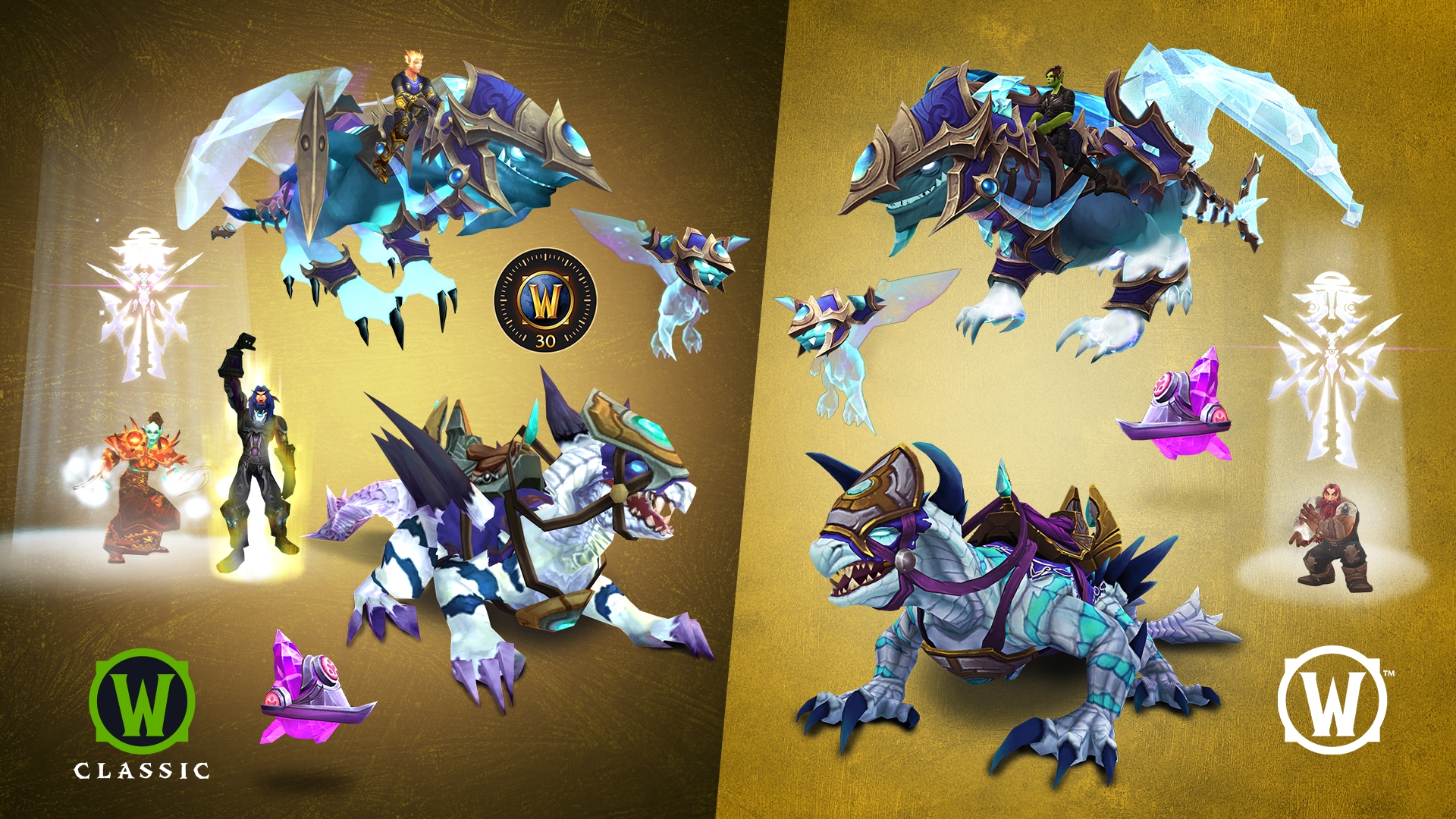
Epic vs Heroic Pack – What’s the Difference: The Heroic Pack is the base bundle with all the cosmetics and mounts. The Epic Pack includes everything in the Heroic Pack plus a Level-58 Character Boost (Anniversary) and 30 days of game time. The character boost can be used on an Anniversary realm character to jump straight to level 58 – useful if you want to dive into Outland content or roll an alt without the 1–58 leveling slog. The 30 days of game time is a nice bonus if you were going to sub anyway. Keep in mind, you cannot use the 58 boost on the new races (Blood Elf or Draenei) – just like in 2021, Blizzard wants you to level those the old-fashioned way for now.
No Power Advantages: Aside from the boost provided in the Epic Pack, these bundles don’t confer in-game power. They’re mainly cosmetics and convenience. The flying mount is purely aesthetic (you’ll still need to train flying skill in game), and it doesn’t offer any speed advantage beyond normal epic flying. So if you’re a collector or just love the idea of riding a Netherdrake from day one of TBC, these packs might appeal to you. Otherwise, you can perfectly well ignore them and not miss out on any gameplay.
Choosing to stay in Classic Era doesn’t mean you’re getting left behind. Blizzard is still pushing a few modern quality-of-life upgrades back into Era and Hardcore, mostly aimed at making grouping and swapping roles less of a chore — without turning the whole thing into a different game.
⚜ Group Finder & Dual Spec for Classic Era: If you choose to stay behind in Classic Era (whether on Normal or Hardcore realms), know that some features from Anniversary are coming to Era too. Blizzard announced that the Group Finder tool (the improved Looking For Group interface) and Dual Specialization will be added to Classic Era realms in an upcoming update. This means even if you remain in Azeroth at level 60, you’ll soon be able to learn a second talent spec for 100 Gold and swap between two builds (with a short cooldown), just like players have on Anniversary realms.
⚜ Hardcore Ruleset Alignments: The original Hardcore Era realms are also getting quality-of-life updates to align with Anniversary Hardcore. Blizzard is enabling Dual Spec, instant mail between your characters, and the Dungeon Finder tool on the old Hardcore realms as well. Essentially, they want the official Hardcore environment to benefit from the same conveniences – Dual Spec has been extremely popular in the Hardcore community, as it allows flexible leveling or PvE/PvP builds without risking your one precious respec. The Dungeon Finder tool being mentioned likely refers to the same Group Finder (not fully automated random dungeon teleports, but a robust group listing system). Either way, grouping up in Hardcore should get easier.
⚜ Edit Mode – UI Customization: A welcome addition to both TBC Anniversary and soon to Era is the Edit Mode UI feature. This is the modern WoW feature that lets you unlock and move UI elements (action bars, unit frames, minimap, etc.) and save custom layouts without any addon. It’s coming in Burning Crusade Anniversary’s launch (so you can fine-tune your UI in the base game), and Blizzard mentioned they are very confident in their desire to bring it to Era realms as well. This change doesn’t affect gameplay per se, but it’s a pure quality-of-life improvement that players have welcomed. No longer will you need a buffet of addons just to tweak your UI – the game itself supports it, optionally.