




Runes of Aldur is the challenge league that shipped with patch 0.5 Return of the Ancients, live since May 29, 2026. It lives in every zone you walk through, starting in the first area of Act 1. The hook is an old Ezomyte Remnant, a stone slab carved with empty runic slots, that you finish by socketing Runes of your choice. Each rune you place wakes a tougher wave of monsters and sweetens the loot they drop. Kill the waves, claim the craft, move on.
What keeps this league relevant past week one is the crafting. Verisium, Runeforging, Runic Ward, and a fresh set of Kalguuran skills all feed straight into your build, not into a stash tab you forget about. This page breaks down every moving part — the Remnant loop, the new defence layer, the rune economy, and the bosses gating the league's pinnacle fight.
PARAM_MODULE_HTML_BANNER_POE2_LVLBOOSTThe league mechanic is one continuous crafting loop, and you meet it in the very first zone of the campaign. No portal, no separate map device. Nothing to grind open first. You walk in, you find the Remnant, you craft.
Every area from Act 1 onward spawns an Ezomyte Remnant carved with empty runic slots. Interact with it and you start Runesmithing: you slot Runes from your inventory into the recipe, then commit. The moment you commit, the Remnant brands a pack of monsters with whatever runes you chose, and clearing that pack hands over the crafted reward. Defeated monsters also drop Verisium, the metal that fuels the rest of the league.
Remnants carry between 2 and 10 slots. Low-slot Remnants are common and cheap; the eight-to-ten-slot ones are rare and craft the rarer outputs. Here's the trade you're making: every extra rune in the recipe adds another wave of enemies and layers a runic modifier onto that wave. More runes, harder fight, better loot. Greedy recipes will overrun an underleveled character, so read the room before you stack ten elemental runes on a fresh Act 1 build.
Once you discover a working rune combination, it saves to your Runebook permanently. The Runebook turns early-game fumbling into a personal cheat sheet — by maps you'll know exactly which combos print the currency or gems you want, and you replicate them on every Remnant you find.
You never re-learn a recipe.
Runic Ward is the league's new defensive layer, and it changes how a squishy character eats a hit. It sits underneath your Life as a second pool — once your Life drops to 1, incoming damage starts chewing through Ward instead, and you only actually die when Ward hits 0. It regenerates over time, so a fight you survive tops you back up shortly after. Honestly, it's the buffer that buys you the half-second to react: pop a flask and reposition.
You add Runic Ward to armour through Runeforging. Armour below level 55 gains it for free, no stats sacrificed. Above level 55 the piece trades some of its regular defences for Ward, so it's a build choice, not a freebie.
Ward does a second job that makes it more than extra health: it doubles as a resource. Kalguuran skills and supports spend Runic Ward instead of mana, so the same pool that eats hits also fuels your new gems. That pulls offence and defence onto one bar. Stack Ward and its regen and you buy survivability and casting headroom at once, which is why the whole league leans on it so hard.
Runeforging is the crafting bench behind the whole league, and you unlock its first tier early in Act 1 at the Verisium Anvil run by Farrow. It splits into two jobs: forging Runic Ward onto your armour, and rebuilding weak uniques into something worth keeping. Verisium and its higher-tier variants feed both, which is why the currency holds value from your first map to your last.
Spend Verisium at the anvil to forge Runic Ward onto a piece of armour. On low-level gear this is pure upside. The forge scales with you: once an armour piece climbs past item level 55, it starts converting part of its base armour, evasion, or energy shield into Ward, which is where the actual decisions begin.
Act 3 opens Unique Verisium Runeforging, a second anvil recipe aimed squarely at uniques. Plenty of the best leveling uniques pack great modifiers on a low base, so they fall off hard once the rest of your gear catches up by maps. This reforges them at a higher item level: same unique, scaled numbers, back in contention deep into endgame. A staple you'd normally vendor around level 40 can come back relevant at 80, which keeps a few campaign favourites alive far longer than they have any right to be. It burns Verisium on top of the base unique, so save it for pieces you actually plan to run.
Two more tools sit on top. Runic Alloys are a currency line of 13 items that work like Perfect Essences — they overwrite an existing modifier on an item with a guaranteed one, so you're not gambling the whole slot. Olroth's Legacy is the spicy one: socket it into a unique and it destroys that item, pulling one of its modifiers out as a Legacy Rune you can slot into other gear.
Which uniques are worth feeding to it is its own rabbit hole — some mods come out build-defining, most come out junk. We keep the full extraction list, slot by slot, in a dedicated guide.
PoE 2 Best Legacy Runes GuidePatch 0.5 ships 23 Kalguuran Skill Gems and 7 Kalguuran Support Gems, all crafted from Remnants instead of bought from a vendor. What sets them apart: they cost Runic Ward instead of mana, and they carry no Attribute or Weapon requirements. Any class slots any of them. A pure Strength Warrior can run a caster-flavoured Kalguuran skill it could never otherwise meet the Intelligence for.
Early standouts people are testing include Mark of Repulsion, a knockback-on-hit debuff, alongside utility gems like Animus Exchange and Voltaic Barrier. Because they drain Ward, they pull double duty with the Runeforging defence layer — your survivability pool is also your skill resource.
The Ward cost is the part worth planning around. Every Kalguuran skill you fire drains the same pool that keeps you alive, so a build leaning on them needs steady Runic Ward regeneration or it runs dry mid-fight. Your defence is also your cast resource. Lean in and you get skills no other class can touch; ignore your Ward sustain and the whole kit stalls the second the pool empties.
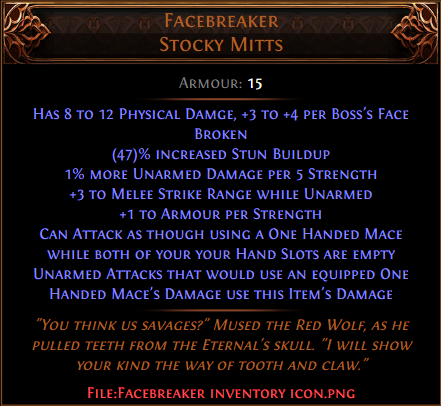
0.5 drops over 50 new uniques into the loot pool, a chunk of them tied directly to the league and Kalguuran content. Two are already pulling attention.
If you're rolling a fresh character into the league, the broader leveling pool matters more than these endgame chase pieces.
PoE 2 Leveling Uniques GuideYes. Ezomyte Remnants spawn in every area from Act 1 onward, campaign and endgame both. There's no hub to unlock and no splinters to grind first.
No. Runic Ward is a separate pool that only kicks in once your Life hits 1. Energy shield still works the way it always has; Ward stacks underneath it as a last-ditch buffer.
Yes. Kalguuran Skill and Support Gems have no Attribute or Weapon requirements and cost Runic Ward instead of mana, so every class can slot every one of them.
Yes. Any recipe you discover is recorded in your Runebook permanently, so you reuse known combos on every future Remnant without re-learning them.
Verisium prices spike in the first two to three days of the league, then settle as supply catches up. If you're crafting early, keep your stacks. If you're not, selling into the launch panic is fine, just not at the rock-bottom price of the first few hours.