




Introduced in Mists of Pandaria, Challenge Mode turned heroic five-man dungeons into timed courses where execution, routing, and clean mechanics beat raw item level. This page recaps how they work in MoP Classic and what actually matters once the clock starts: how to enter and start a run, what gets scaled, what’s disabled, how resets behave, and why minimum-kills requirements shape your route. It also gathers the practical prep: priority consumables and engineering toys, group roles that cover interrupts/dispels/externals, and the small habits that save real seconds.
With Mists of Pandaria Classic launching 21 July 2025, we’ve bundled the essentials you’ll use run after run: a unified timers table for all nine dungeons, quick notes on safe skip logic and pull pacing, a rewards breakdown (silver vs. gold value, teleports, cosmetics), and fast links to each dungeon video guides if you’re ready to drill into specifics. Whether you’re returning to sharpen an old route or pushing your first Gold, start here — then dive into the individual dungeon guides to turn fundamentals into consistent medals.
Challenge Modes in Mists of Pandaria are essentially heroic difficulty dungeons turned into high-pressure time trials. The moment your party activates the Challenge Orb, every item above ilvl 463 is squished down, ensuring that later-tier gear offers no shortcut; your success depends on mastery of pulls rather than raw stats! Once the clock starts, routes, cooldown mapping, and deathless execution matter far more than any upgrade, and every sloppy wipe is paid for in minutes, not just morale.
All nine Pandaria dungeons participate, and Blizzard has spiced them up with tighter mob packs and gatekeepers that refuse to open until enough trash is dead. Gear damage is switched off (no repair bills here) and you’re free to chug potions, drums, and quirky crowd-control items to keep momentum high. Hit and expertise caps stay where they are despite the down-scaling, so careful reforging, enchants, and gemming still pay off — especially because dungeon creatures sit a notch below raid-boss level and accurate hits keep your opener clean.
Clearing within the dungeon’s timer brackets awards Bronze, Silver, or the coveted Gold medal, each unlocking progressively shinier rewards: unique armour sets, mounts, pets, titles, and Feats of Strength achievements. Fast groups also bag 60 Valor Points per run, so even after you’ve collected the cosmetics, clean repeats remain worthwhile for steady currency and practice.
And your performance isn’t just personal bragging rights: guild and realm leaderboards track the quickest completions, inviting teams to refine pull order, polish skip logic, and shave seconds in pursuit of the top slot. A full slate of achievements rounds out the system, rewarding precision, perseverance, and teamwork under the clock—and giving you clear goals as you push from your first timed clear to consistent Golds.
Inside Challenge Mode dungeons a few ground rules keep the playing field even. First of all, Mass Resurrection is disabled entirely; if someone dies and releases, the game revives them at the entrance. You can’t hot-swap players mid-run either — changing the group requires leaving and starting over — though you’re free to respec or adjust glyphs any time you’re out of combat.
Challenge Modes can be reset as often as you like. The party leader gets a special instance option that teleports everyone to the start, respawns the dungeon, and restarts the timer—no hourly caps or daily lockouts. Teams routinely use this to fish for a clean opener, sync cooldowns, and align patrol timings before committing to a gold-pace attempt.
Resetting wipes the slate on every class cooldown longer than three minutes and on item cooldowns such as Lesser Invisibility Potion and Invisibility Potion. One notable outlier is Ancient Hysteria, whose cooldown persists through a reset. Bosses don’t drop loot and your gear never loses durability inside these runs, so you can chain attempts without repair breaks. Between pulls, keep stacking small edges—pre-pots, drums, engineering toys—because in Challenge Modes, the clock only rewards execution.
Challenge Modes clamp raw item power to a common baseline, so your character’s strength comes from smart gearing rather than brute ilvl. Anything above ilvl 463 is automatically downscaled to 463, while pieces at 463 or lower stay exactly as they are — there’s no “out-gearing” the timer with raid loot. Trinkets, however, are a special case: any trinket that begins at 463+ keeps its unique proc or on-use when scaled, which turns trinket slots into real decision points. Lining those effects up with bloodlust/drums, burst windows, and boss HP thresholds is often worth more time than chasing one more secondary-stat reforge.
Accuracy stats are preserved as well, so specs that rely on Hit or Expertise remain properly capped after the downscale — no emergency reforging between pulls. Use that stability to push into your best secondaries (haste breakpoints for DoTs/HoTs, mastery for steady cleave, crit where it meaningfully converts), and remember that raid-tier set bonuses are disabled in Challenge Modes, as are Sha-Touched Gems. If a piece only shines because of its set effect or Sha socket, bank it and bring a cleaner 463-friendly alternative that gives you raw, predictable stats.
Finally, the system does not touch bonuses that come from outside your gear’s item level. Consumables, standard enchants, regular gems, and profession perks all operate at full strength, which is why meticulous prep pays off: double-potting around key pulls, pre-enchanting for your preferred stat profile, slotting throughput gems, and leveraging profession tools (where allowed) convert directly into seconds off the clock. In a world where everyone is scaled, these external edges (stacked correctly) are the difference between a comfortable Silver and a repeatable Gold.
Prefer to learn by watching? This section collects nine focused video guides — one for each Mists of Pandaria Challenge Mode dungeon. Each video shows a clean, reproducible route with pull order, safe skip logic around minimum-kill gates, boss plans, and where to spend or save major cooldowns. Timers and checkpoints are annotated so you can see exactly how a gold-pace split should look in practice.
All videos are in English and aim for consistency over flashy risks: stable comps, repeatable line-of-sight setups, and contingency notes for messy patrols. Start with the dungeon you’re tackling next, copy the pacing, then iterate — these routes are built to be learned, not just watched once.

Beyond the standard flasks, food, and potions, seasoned speed-runners swear by a handful of specialised gadgets that turn even tight timers into comfortable clears. These items aren’t strictly required, yet they offer the kind of mobility, crowd control, and emergency utility that can shave precious seconds off a run or rescue a shaky pull. Keep a few of the following in your bags and you’ll feel the difference the moment the clock starts.
A timed run almost always hinges on clean skips, and the gold-standard tool for that remains the Invisibility Potion. Popping one out of combat buys you 18 full seconds of true invisibility, enough to ghost past an entire trash wing: so long as you’ve already triggered any speed boost (think Stampeding Roar) before drinking, because the first action you take will break the cloak. When the gap you need to cross is shorter or you’re just drilling a route, a cheaper but shorter-lived option exists in the Lesser Invisibility Potion, which shares the same cooldown but costs far less to stockpile.
Engineers add another layer of flexibility with the belt-tinker Invisibility Field. It grants a 15-second vanish every three minutes without consuming your potion cooldown, letting you reserve potions for damage buffs later in the run. Many speed-runners keep this on a spare belt so they can swap back to Nitro Boosts once the skip is done, effectively pairing stealth with a rocket-propelled sprint whenever the timer demands both.
A well-rounded stat lineup saves precious seconds when healers and tanks can push harder, yet not every five-man comp brings every raid buff. If your group is missing a Druid, Monk, or Paladin, simply drop a Drums of Forgotten Kings. The drums apply Blessing of Forgotten Kings to every party member for thirty minutes, boosting Strength, Agility, and Intellect by 4% — more than enough to keep your damage and hybrid healing on pace with gold-timer expectations.
Likewise, teams that lack a Priest, Warlock, or Warrior can cover the stamina slot with a single click of a Runescroll of Fortitude III. One scroll grants an 8% health pool increase to the entire party for an hour, ensuring tanks survive aggressive chain pulls and healers gain a forgiving buffer while juggling cooldowns. Pack both consumables and you’ll never let a missing class buff slow down your Challenge Mode run!
Movement upgrades can shave more time off a Challenge-Mode run than any single DPS cooldown, and three gadgets in particular see constant play. A cloak fitted with a Goblin Glider lets you launch into a thirty-second glide on a five-minute cooldown, ideal for leaping off balconies in Shado-Pan Monastery or floating straight onto Gate of the Setting Sun’s final platform. Because the glide behaves like a slow-fall effect, you can pop it mid-air and steer around patrols that would otherwise demand a full clear.
Boot engineers rely on Nitro Boosts: a three-minute sprint that jacks run speed to 250%. Five seconds may sound brief, yet chaining the burst between packs (especially when paired with an invisibility potion) turns dead space into momentum that pushes you ahead of the gold timer.
For groups without universal movement buffs, a leatherworker can drop a quick charge of Drums of Speed. The drums boost nearby party members’ movement by fifteen per cent for thirty seconds on a two-minute cooldown, smoothing out long corridors or back-tracking routes after a strategic wipe-reset. Keep one of each tool in your kit and you’ll feel the dungeon shrink around you.
A couple of pocket-sized toys can take the sting out of otherwise messy pulls. For emergency roots, nothing beats an Embersilk Net: toss it from up to thirty-five yards away and it locks the target in place for three seconds while ticking fire damage — long enough to let the tank shuffle packs into a tidy clump or interrupt a dangerous cast without burning a real cooldown. When you need a full minute of hard crowd control, crack open the Rod of Ambershaping; it cocoons a mob in amber until the group is ready, buying precious breathing room during high-stakes pulls in dungeons like Shado-Pan Monastery’s final hallway.
Damage-oriented gadgets have their own place in the speed-runner’s toolkit. Engineers love the G91 Landshark, an uncapped AoE bomb on a one-minute cooldown that chunks clustered trash for a hefty burst of fire damage. If Scholomance is on the roster, consider farming a Nearly Full Vial of Polyformic Acid; its extra damage against Darkmaster Gandling helps melt the final boss when every second on the clock matters. Finally, the Battle Horn lets you taunt every creature within forty yards, instantly snapping scattered patrols onto the tank so the group can unload cooldowns instead of chasing stragglers. Carry one or two of these trinkets each, and you’ll feel your gold-medal pace tighten with every pull.
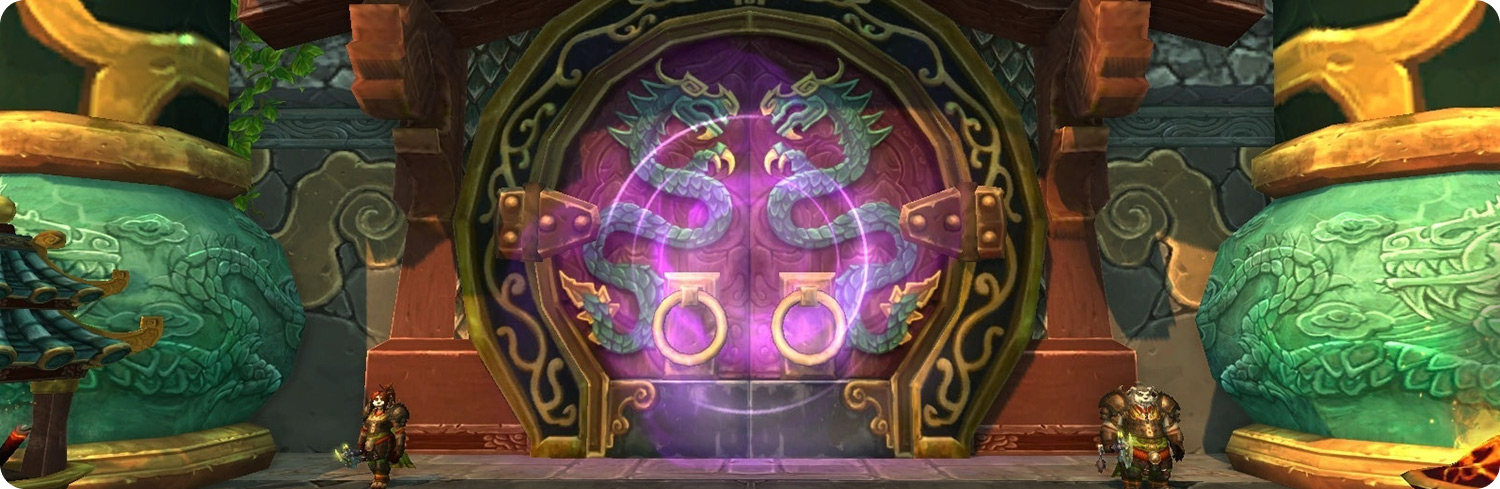
Every MoP Challenge Mode run is, at its heart, a race against the clock. Blizzard fixed the enemy count, route, and gear level, so the only variable left is how quickly your group can finish. Each instance has three cut-off times — Gold, Silver, and Bronze. Hitting them unlocks progressively smaller Valor Points rewards as well as the transmog, title, and mount achievements that make Challenge Modes so coveted.
In practice this timer does more than decide your medal: it shapes your entire pull strategy, dictates when to use Heroism, and even influences class composition. Think of the timer as the dungeon’s invisible boss: ignore it and you’ll limp out with Bronze, plan around it and you’ll blast through mobs, chain-pull packs, and snag that priceless Gold. The tables below list every medal threshold, so you can map your route, benchmark your progress, and shave those last few seconds off your best run.
| Dungeon | Medal | Timer | Reward |
|---|---|---|---|
| Temple of the Jade Serpent | Gold | 00:15:00 | 60 Valor Points |
| Temple of the Jade Serpent | Silver | 00:25:00 | 50 Valor Points |
| Temple of the Jade Serpent | Bronze | 00:45:00 | 40 Valor Points |
| Stormstout Brewery | Gold | 00:12:00 | 60 Valor Points |
| Stormstout Brewery | Silver | 00:21:00 | 50 Valor Points |
| Stormstout Brewery | Bronze | 00:45:00 | 40 Valor Points |
| Gate of the Setting Sun | Gold | 00:13:00 | 60 Valor Points |
| Gate of the Setting Sun | Silver | 00:22:00 | 50 Valor Points |
| Gate of the Setting Sun | Bronze | 00:45:00 | 40 Valor Points |
| Shado-Pan Monastery | Gold | 00:21:00 | 60 Valor Points |
| Shado-Pan Monastery | Silver | 00:35:00 | 50 Valor Points |
| Shado-Pan Monastery | Bronze | 01:00:00 | 40 Valor Points |
| Siege of Niuzao Temple | Gold | 00:17:30 | 60 Valor Points |
| Siege of Niuzao Temple | Silver | 00:30:00 | 50 Valor Points |
| Siege of Niuzao Temple | Bronze | 00:50:00 | 40 Valor Points |
| Mogu'shan Palace | Gold | 00:12:00 | 60 Valor Points |
| Mogu'shan Palace | Silver | 00:24:00 | 50 Valor Points |
| Mogu'shan Palace | Bronze | 00:45:00 | 40 Valor Points |
| Scholomance | Gold | 00:19:00 | 60 Valor Points |
| Scholomance | Silver | 00:33:00 | 50 Valor Points |
| Scholomance | Bronze | 00:55:00 | 40 Valor Points |
| Scarlet Halls | Gold | 00:13:00 | 60 Valor Points |
| Scarlet Halls | Silver | 00:22:00 | 50 Valor Points |
| Scarlet Halls | Bronze | 00:45:00 | 40 Valor Points |
| Scarlet Monastery | Gold | 00:13:00 | 60 Valor Points |
| Scarlet Monastery | Silver | 00:22:00 | 50 Valor Points |
| Scarlet Monastery | Bronze | 00:45:00 | 40 Valor Points |